Key insights from
Silent Spring
Audio available
12 minute read
Published Sep 27, 1962
What you'll learn
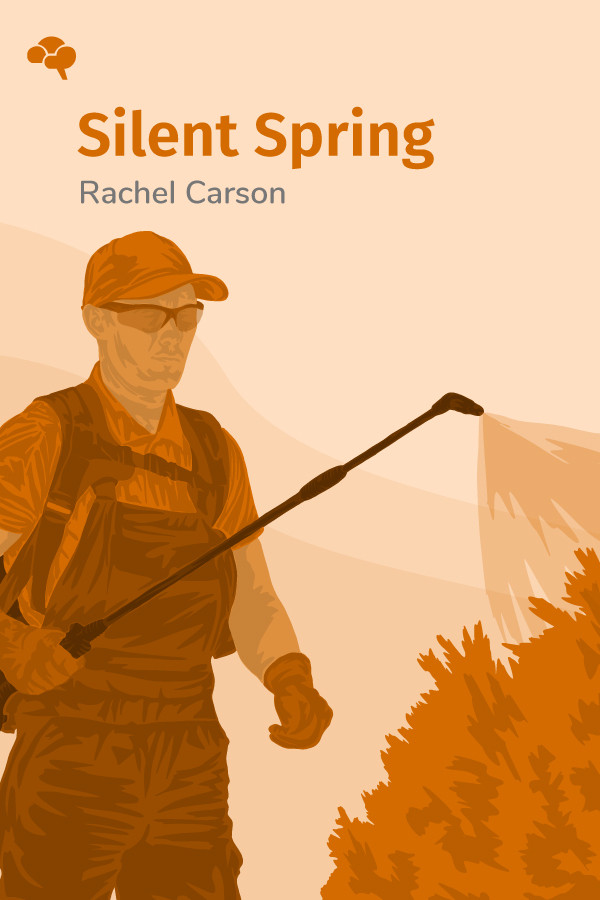
In 1962, science writer Rachel Carson sounded a terrifying alarm. In the wake of World War II, the seemingly boundless power of science usurped all environmental concerns, causing scientific advancement to devolve into environmental degradation. As a result, a new industry of highly damaging and incredibly lucrative manufactured insecticides filled the earth, infecting waterways, soil, crops, animals, and human beings in an interwoven spiral of ecological danger. Amid backlash from government and industry leaders, Carson’s paradigm-shifting work Silent Spring shook readers from complacency and inspired a generation that would (hopefully) fall far from the chemical-ridden tree.
Key insights
- • What you'll learn
- 1 Humans traded a bug infestation for ecological infection—tampering with nature never ends nicely.
- 2 DDT was the quiet killer of the insecticide family.
- 3 Insecticides spread quickly—when the river falls ill, people get sick too.
- 4 When scientists and politicians bump heads, nobody wins.
- 5 Take a leaf from Mother Nature’s book—she knows what she needs to heal.
Similar titles